

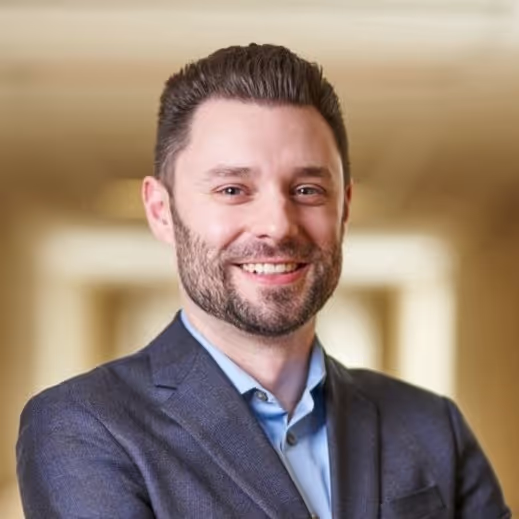
Matt Head is the Innovation Adoption Lead at Core Innovation, where he supports the successful adoption of new technologies within healthcare organizations. His role bridges innovators and hospital teams, helping companies align their solutions with clinical needs and organizational priorities. Matt guides startups through the complex internal processes involved in adoption, including stakeholder engagement, governance, procurement, and approval pathways. With a focus on reducing risk and avoiding delays, he helps companies prepare for real‑world implementation and builds scalable adoption frameworks that support broader uptake across the Canadian healthcare ecosystem. With a background in medical imaging, Matt brings a practical, risk‑aware perspective grounded in real‑world workflows, patient safety, and the operational realities of delivering care.
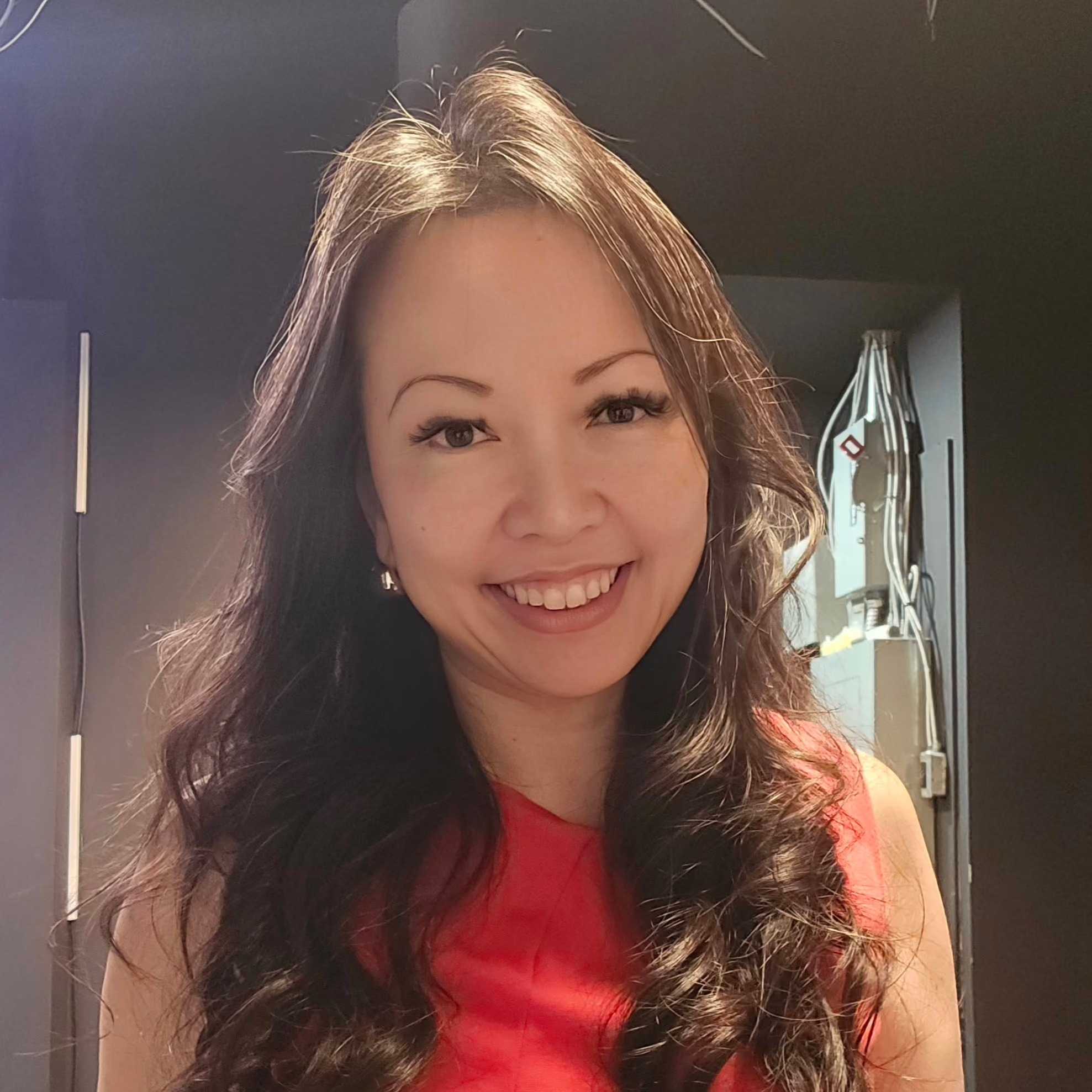
Amy Yee is the Founder and Host of Wired for Change, a podcast exploring how transformation happens and how to make it happen, spanning business, technology, leadership, and personal growth. Each episode dives into the mechanics of change, including people, process, technology, data, and policy, featuring conversations with industry leaders, innovators, and changemakers who have navigated disruption and driven impact. Amy also serves as Chief Cyber Resilience Officer at C3SA, advising organizations across government, healthcare, critical infrastructure, and the private sector on cyber resilience, digital trust, and AI adoption, bringing a decade of C-suite experience to helping leaders translate strategy into meaningful transformation.

Blake Daly is a health innovation leader at Bruyère Health, where he serves as Innovation Lead and Director of the CAN Health Long‑Term Care Innovation and Scaling Network. In this role, he leads efforts to identify, evaluate, and adopt high‑impact health technologies that address real clinical and operational challenges in long‑term care and seniors’ health. Blake works closely with clinicians, health systems, and startups to support the scaling of proven innovations across Canada. He brings a system‑level perspective to health‑tech adoption, focusing on practical implementation, evidence generation, and cross‑sector collaboration to improve care delivery and outcomes for older adults.

Dr. Matthew Bromwich is a pediatric otolaryngologist at the Children’s Hospital of Eastern Ontario (CHEO) and an Associate Professor of Otolaryngology–Head and Neck Surgery at the University of Ottawa. He serves as Director of Core Innovation, where he leads efforts to translate frontline clinical challenges into scalable, real‑world health‑tech solutions. An experienced surgeon‑founder and medical device innovator, Dr. Bromwich is the founder and Chief Medical Officer of SHOEBOX Audiometry, a globally deployed hearing‑testing platform that emerged from clinical practice and has expanded access to hearing care worldwide. Dr. Bromwich brings a practitioner’s perspective to health‑tech innovation to advance more sustainable, accessible, and patient‑centred healthcare solutions.
Blake Daly is a health innovation leader at Bruyère Health, where he serves as Innovation Lead and Director of the CAN Health Long‑Term Care Innovation and Scaling Network. In this role, he leads efforts to identify, evaluate, and adopt high‑impact health technologies that address real clinical and operational challenges in long‑term care and seniors’ health. Blake works closely with clinicians, health systems, and startups to support the scaling of proven innovations across Canada. He brings a system‑level perspective to health‑tech adoption, focusing on practical implementation, evidence generation, and cross‑sector collaboration to improve care delivery and outcomes for older adults.
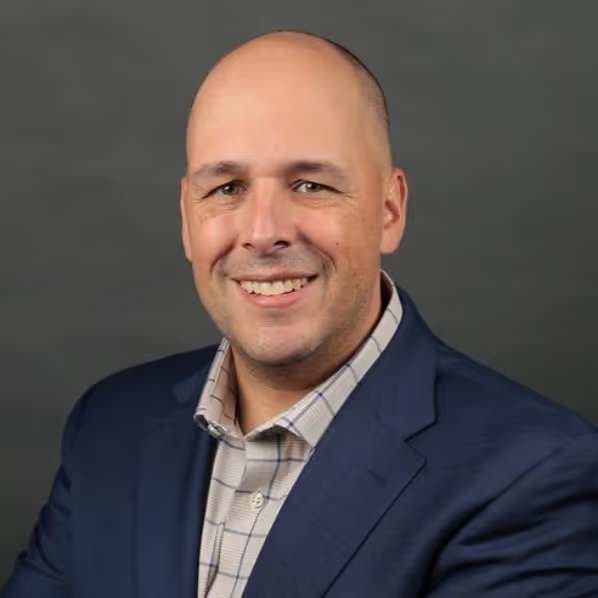
Thomas Moore is the General Manager of PTL Solutions, a consulting firm specializing in medical device development. With over 20 years of experience in the medical device industry, he brings a pragmatic and optimistic perspective to regulatory affairs, quality management, and product development strategy. After spending 16 years in industry workingon a range of medical devices, Thomas transitioned to consulting, where he has contributed to the development of dozens of technologies across multiple stagesof maturity. His work focuses on helping startups and established companies align regulatory and quality requirements with innovation, funding realities,and go-to-market goals, enabling teams to bring new technologies to market efficiently and responsibly.

Shifra Samber is the AI Program Coordinator at the CHEO Research Institute, where she leads cross‑functional initiatives supporting the responsible adoption of artificial intelligence across research, clinical, and operational settings. With a clinical background as a diagnostic medical sonographer and formal training in quality improvement, she brings practical, frontline experience to the development of CHEO’s AI governance frameworks. Her work focuses on ensuring that AI tools are evaluated, implemented, and monitored in ways that align with clinical workflows, patient safety, and ethical standards, helping bridge the gap between technical innovation and real‑world pediatric healthcare practice.

Allie Grassie is the Director of Analytics and Data Governance at the Children’s Hospital of Eastern Ontario (CHEO), where she supports initiatives that strengthen the use of data, technology, and innovation across healthcare and research. With experience spanning healthcare, financial services, and nonprofit organizations, she brings a strategic and collaborative approach to advancing data-driven decision-making and organizational innovation. Her work focuses on building the frameworks and partnerships needed to enable responsible innovation, helping bridge the gap between technology, data, and meaningful healthcare impact.

Andrea Pepe is the Research Lead at Core Innovation, where she supports healthcare and MedTech innovators in building rigorous clinical evidence to advance product development. Andrea works closely with companies and clinical investigators to translate real-world clinical needs into meaningful research strategies that support design decisions, usability, and regulatory readiness. Her work spans the full development pipeline, from early user and patient engagement to usability studies and regulated clinical trials. Through an interdisciplinary and highly connected research ecosystem, Andrea helps innovators reduce risk, shorten timelines, and generate credible evidence that delivers both scientific integrity and commercial value.

John Vail is the Director of Operations (Ontario) at the CAN Health Network, where he supports the validation, procurement, and scaling of Canadian health‑tech solutions in partnership with healthcare operators across the province. He brings extensive experience in health‑system operations and transformation, with previous leadership roles at Trillium Health Partners, and a strong focus on enabling adoption‑ready innovation within complex health systems.

Gary Ryan is the Executive Lead of the CAN Health Network, a pan‑Canadian initiative focused on scaling Canadian health‑tech solutions through real‑world adoption and procurement. He brings deep health‑system leadership experience, having previously served as Chief Operating Officer at Southlake Regional Health Centre, and is widely recognized for advancing practical, system‑embedded healthcare innovation across Canada.