
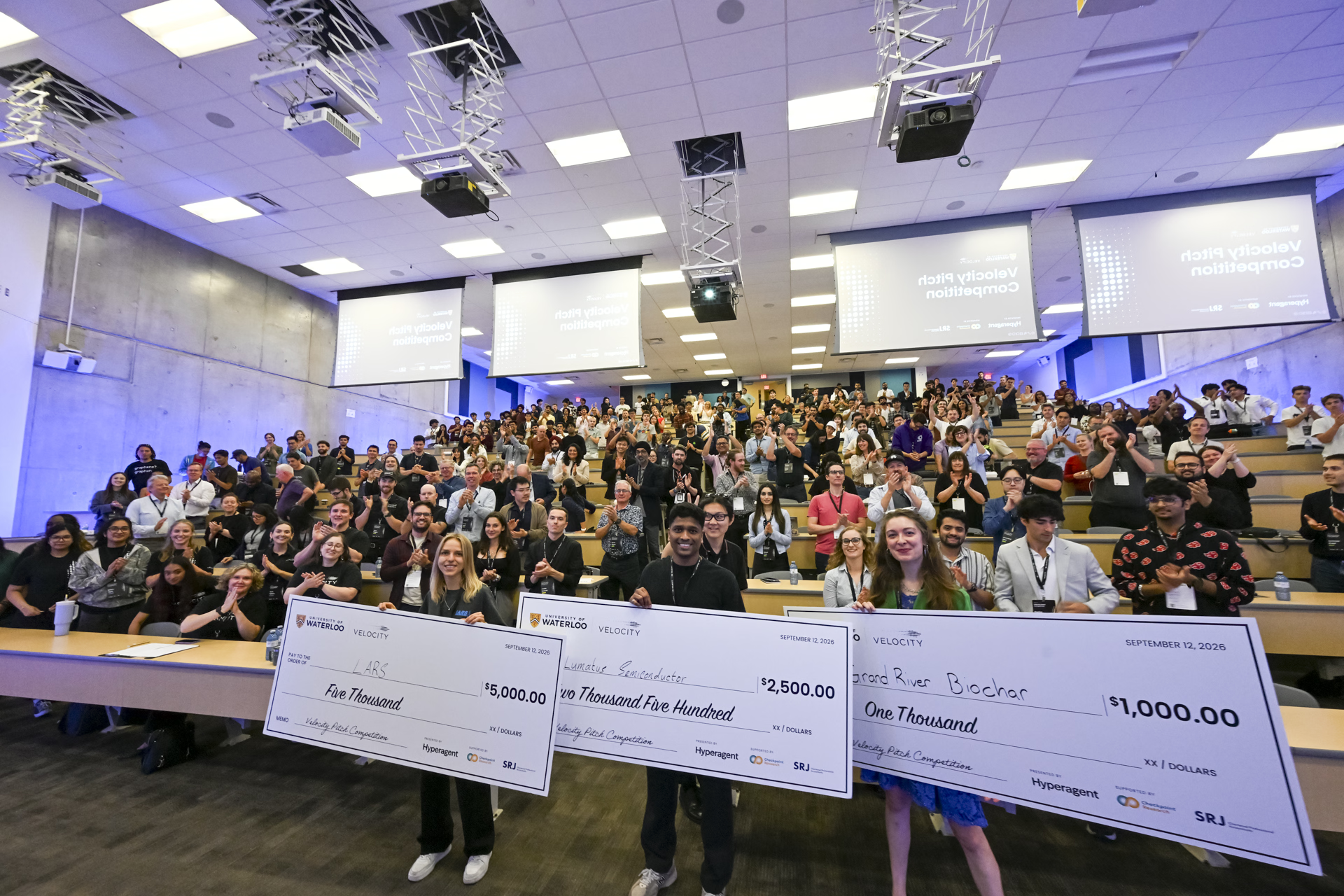
On a recent Saturday, hundreds of aspiring entrepreneurs, founders, investors and business leaders gathered in Waterloo for the latest edition of the Velocity Pitch Competition. Students had just two minutes to pitch their ideas, but the real story was not the competition itself. It was the ecosystem behind it.
According to PitchBook's latest university rankings, Waterloo ranks first in Canada and seventh in the world for producing venture-backed founders. Those results reflect not only the outstanding alumni that the University of Waterloo trains but also an ecosystem of founders, alumni, mentors, investors and business leaders who help students turn ideas into companies.
That ecosystem was on full display at the pitch competition where more than 100 judges volunteered their time to meet with students, provide candid feedback and make introductions. These judges are all connected Velocity, Waterloo's flagship startup incubator, as alumni founders, investors, operators, executives and startup leaders who have built successful companies and continue to support the next generation of entrepreneurs.
The judges understand the ecosystem’s impact because they have lived it themselves.
Dr. Connor Kapahi (PhD ’26) is founder and CEO of Mandel Diagnostics, a Velocity startup developing tools that help clinicians detect eye and brain diseases earlier. After winning the Velocity Pitch Competition in 2023, he has experienced firsthand how pitch competitions can help founders sharpen their message and prepare for future conversations with customers, partners and investors.
One of the most valuable connections he made resulted from an impromptu five-minute presentation to a visiting group that initially seemed unrelated to his business. Among those listening was a former medical technology founder who later helped introduce Kapahi to key supplier contacts the company had been trying to reach for months.
Ibukun Elebute (MBET ’26) is the co-founder of CELLECT Laboratories, a Velocity startup that is developing a non-invasive menstrual and gynecological specimen collection platform designed to make diagnostic testing more accessible.
An important piece of feedback Elebute received during such a competition was simple: "So what?" While her team could clearly explain the technology behind their idea, they needed to get better at translating that innovation into real-world outcomes such as patients served, barriers removed and market opportunity. Since then, CELECT has won numerous pitch competitions, leveraging the advice they gained during those early days.
This year’s pitch competitors continue to benefit from the ever-growing ecosystem of experts and supporters. Pranav Gavirneni (BASc ’19, MASc in progress), founder of Lumatus Semiconductor, says he connected with more than 10 judges during the event and has already scheduled follow-up meetings with several of them. Lumatus Semiconductor is developing real-time tissue sensing for surgery to help doctors distinguish cancerous tissue from healthy ones during procedures.
Serena Wittenberg (BASc ’26, MASc in progress) is the founder of LARS, a startup that designs semi-robotic assistive technologies that support ultrasound scanning without disrupting clinical workflow. Following her pitch, Wittenberg was approached by angel investors, patent lawyers and early-stage venture professionals to discuss next steps. Several follow-up meetings have already focused on early fundraising opportunities and long-term intellectual property strategy.
Those types of conversations illustrate how Velocity is helping founders build the relationships needed to secure customers, mentors, partners and investors early in their journey.
"If you ask any entrepreneur why they were successful, they'll tell you they didn't do it alone," says John Dick, Managing Director of Velocity. "There was a community around them that opened doors, made introductions and helped remove barriers. That's what makes Waterloo special. It's a community that actively helps founders get established quickly, then accelerates their progress."
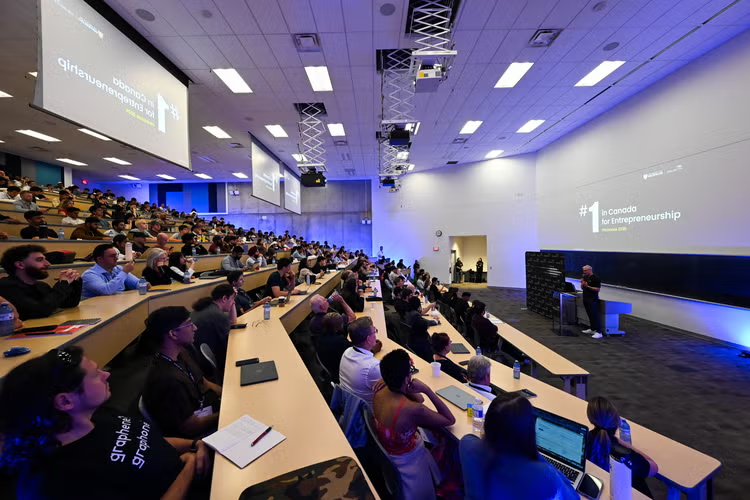
According to Dick, many of the judges and mentors have founded or scaled companies in Canada and understand how much a single conversation can change a founder's trajectory. Their continued involvement helps create one of Canada's strongest startup ecosystems, giving students access to expertise that is often difficult to find elsewhere.
That cycle of support helps explain why Waterloo continues to rank among the world's leading institutions for entrepreneurship. Velocity helps founders de-risk their ideas quickly with early traction through first customers, pilot projects and fundraising opportunities, while the broader Waterloo ecosystem provides them with the later stage mentorship, expertise and connections needed to scale.
Since 2008, Velocity has helped launch more than 560 startups that together exceed $40 billion in enterprise value and created more than 3,300 jobs in Ontario.
By helping founders secure early customers, investment and mentorship, Velocity is helping more Waterloo startups establish themselves in Canada and continue building here as they grow.
The article was originally published on UWaterloo News.