
Every building, bridge, and highway overpass you pass begins as a problem that was solved by a structural engineer. How much load can this floor carry? Will this column hold when the wind picks up? These calculations draw on years of project experience. And when the engineer who holds that experience walks out the door, much of it goes with them.
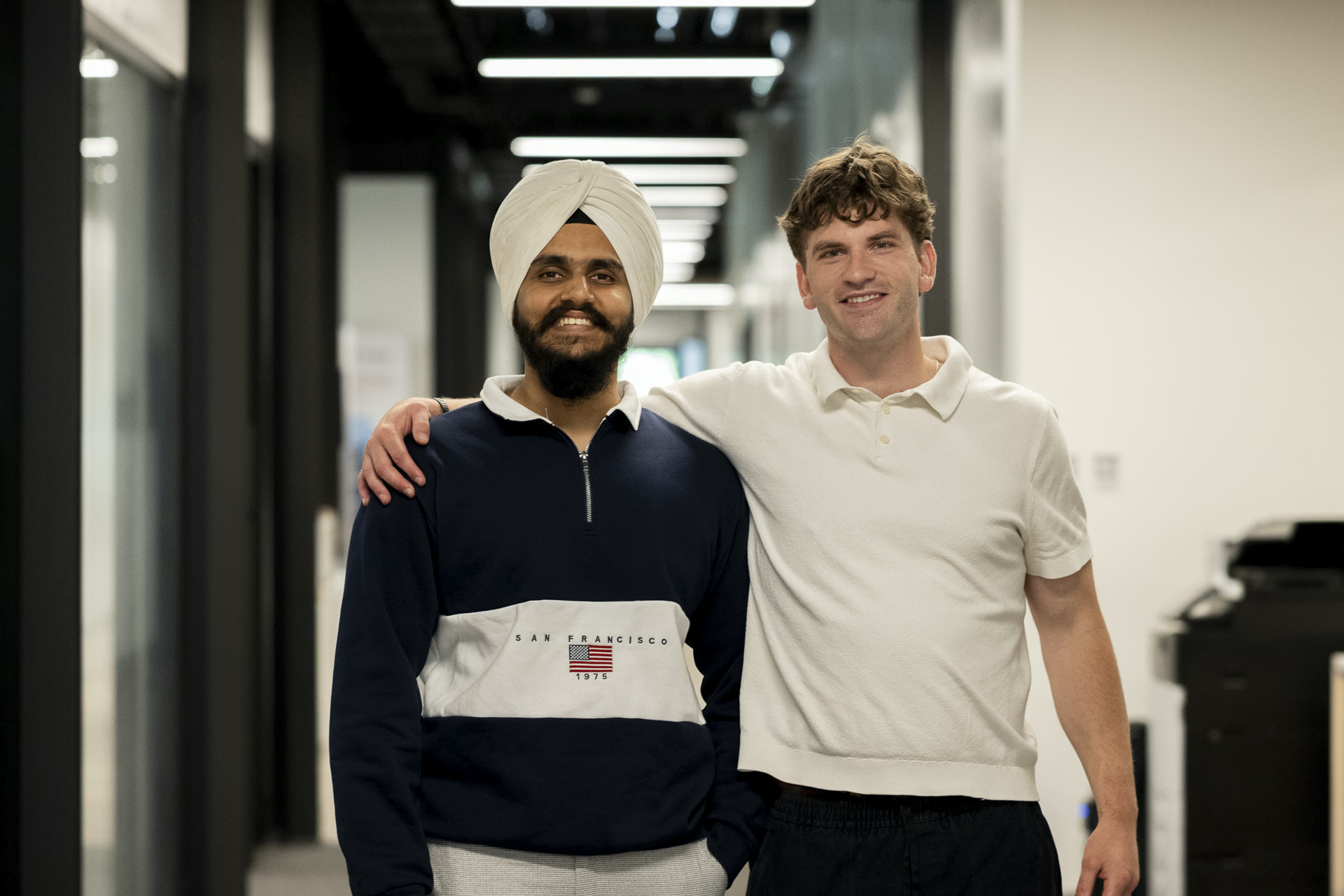
James Hinsperger (BASc ’25) and Mankirat Singh Sains (BASc ’25), co-founders of Sidian, lived this reality firsthand. Both trained in civil and structural engineering, they watched firms spend weeks reconstructing decisions that had been made before, buried in folders no one had time to search. Project after project, companies were setback when engineering team members left.
The root of the problem is structural, in more ways than one. Engineering firms rely on a fragmented stack of software: 3D modelling tools like Revit and AutoCAD, structural analysis platforms like ETABS, internal Excel calculation sheets, and PDF drawing packages. None of these tools speak to each other. When a project closes, the data scatters across a file drive and the reasoning behind every design decision fades into memory. Junior engineers learn by asking seniors the same questions over and over. Senior engineers retire, and the cycle breaks.
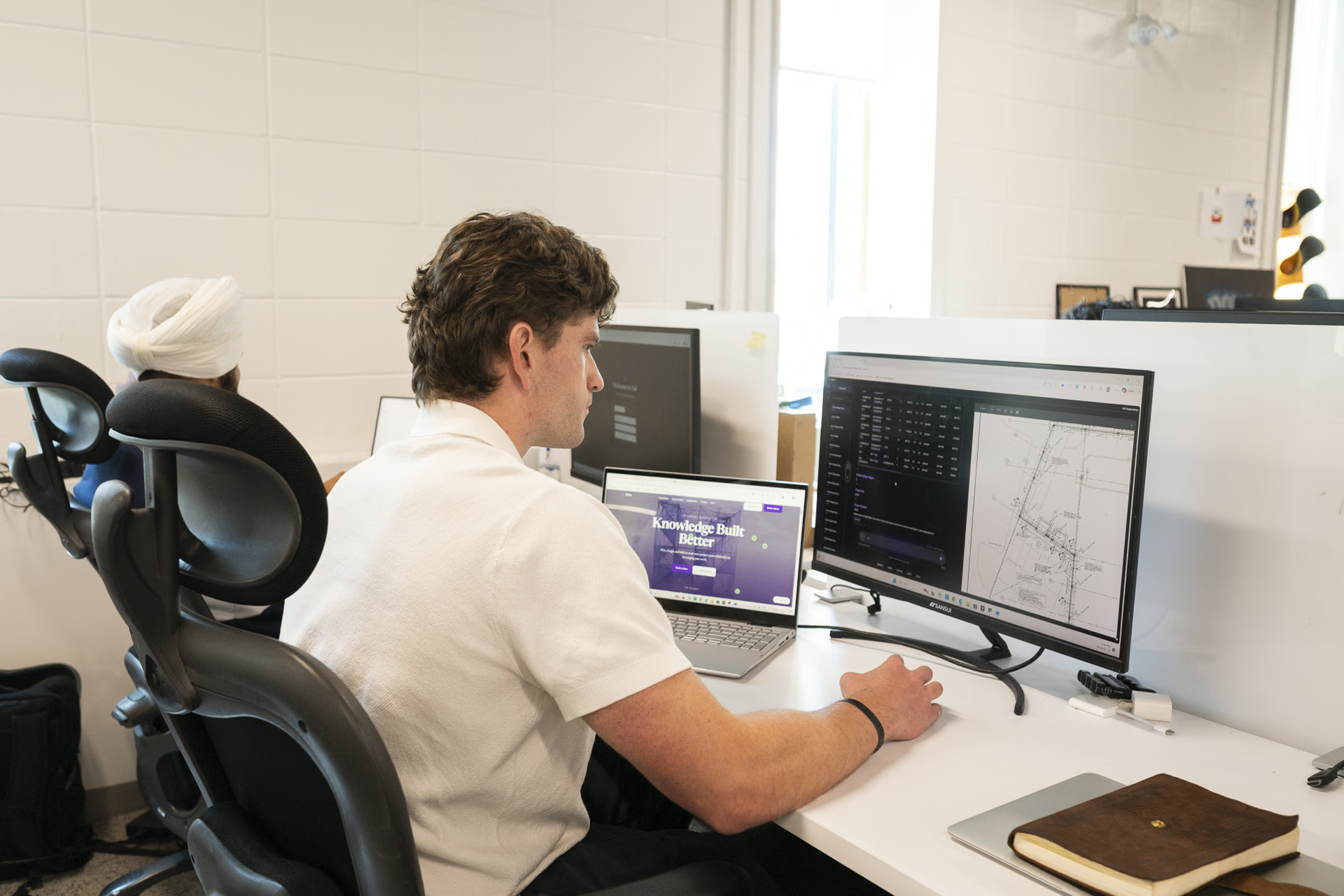
That’s where Sidian comes in. Sidian's platform, Sid, connects to the tools engineering firms already use and ingests years of past work overnight: drawings, models, calculation packages, and reports. From that archive, it builds a structured company brain, technically a set of knowledge graphs, that makes every past decision searchable and queryable. A junior engineer facing a new shear wall problem can ask Sid what the firm has done on similar buildings. A principal reviewing a column design can see which precedents apply and why. According to Hinsperger, a new hire who would typically spend months getting up to speed is effectively brought to the level of an intermediate engineer from the start.
The platform also connects directly to structural analysis tools, running code checks against the building code, flagging discrepancies, and keeping a logged record of why decisions were made, by whom, and when. Beyond checking existing work, Sid can generate new models, run calculations, and assist in drafting, turning what was once a purely retrospective record into an active part of the design process.
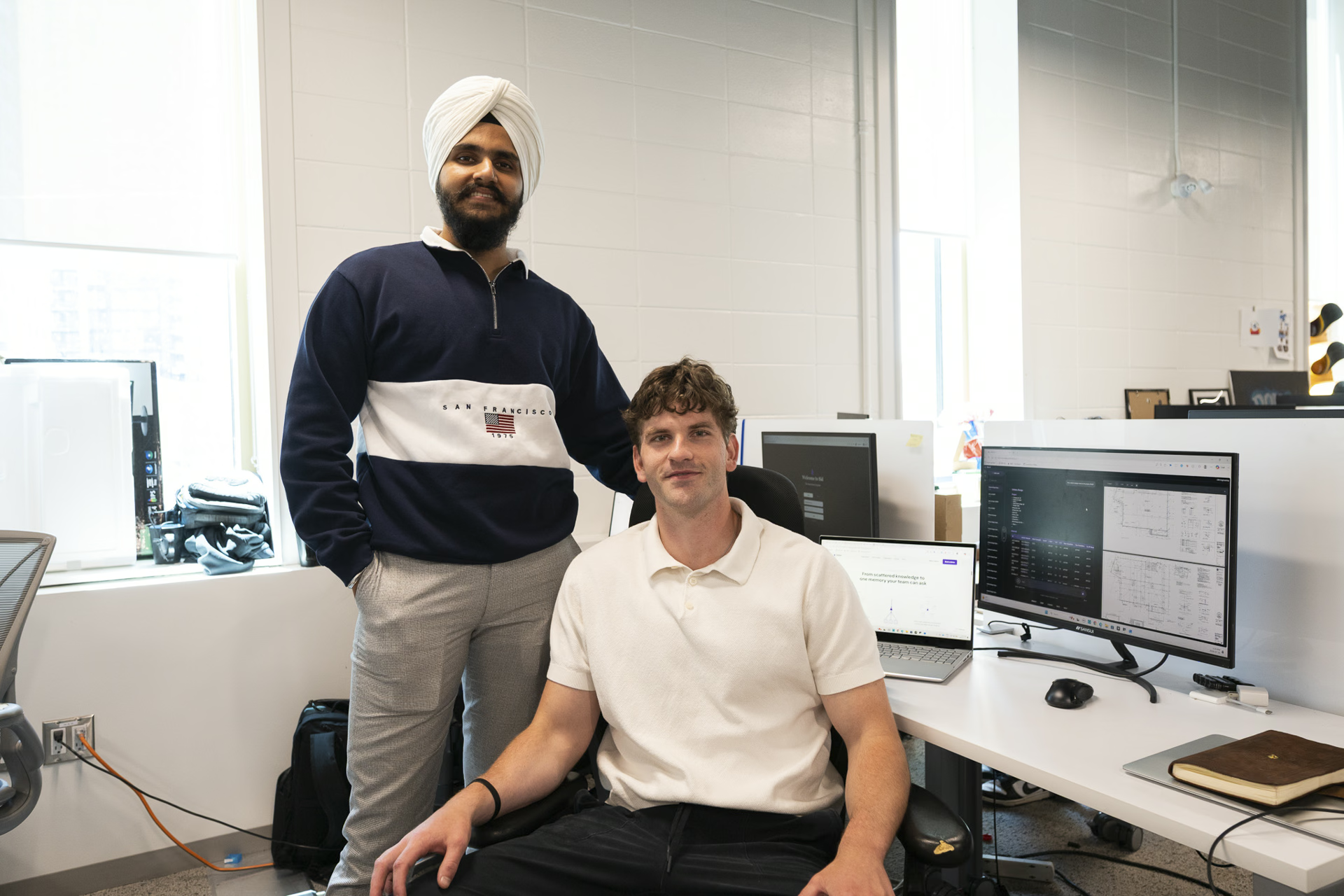
"By leveraging past decisions you've made, our system can flag things you would not have thought of," says Hinsperger. "We are not saying we are going to replace engineering. At the end of the day, an engineer needs to stamp it. But we're saying you can be more comfortable with what you stamp, and you can design things more intelligently, factoring in cost and constructability, and learning from past mistakes rather than repeating them."
Since joining Velocity, Sidian has drawn on the expertise of faculty advisors including Dr. Carl Haas, Professor in the Civil and Environmental Engineering department and a University Research Chair, whose work spans AI and robotics in construction, and Dr. Joyce Kim, Assistant Professor in the Department of Civil and Environmental Engineering. Connections through Waterloo's Vision and Image Processing Research Group have also helped the team recruit specialized talent. That access to domain expertise, provided pro bono through the University of Waterloo's network, has shaped how Sidian approaches the hardest technical problems in the industry.
Sidian is currently working with seven firms across Canada and internationally, with additional large Canadian clients on the way, including conversations with some of the country's top-ranked firms. The company is also actively hiring co-op students from UWaterloo, extending the loop between the university and a fast-moving product team.
The construction and infrastructure industry has resisted software change for decades, partly because of the multimodal complexity of its data and partly because the stakes are too high to get wrong. An engineer's stamp is a legal commitment. What Hinsperger and Sains are building does not ask firms to change how they work. It asks them to stop losing what they already know.
Their long-term goal is a unified workspace spanning every discipline involved in bringing a building from idea to construction, one where no decision, past or future, has to be reconstructed from scratch.