
Canada does not have a shortage of health innovation. It has a shortage of systems designed to scale it.
That distinction drove the agenda at the third edition of the National Health-Tech Innovation Conference 2026, held in Kitchener-Waterloo and co-led by Velocity and the CHEO Research Institute. Over two days, the region became the meeting point for a national conversation: why does Canada consistently produce world-class health technology only to watch it scale somewhere else?
The answer, as speaker after speaker made clear, is structural. And fixing it will require the kinds of partnerships that can only be built when the right people are in the same room.
When Velocity launched Velocity health in 2023, the goal was concrete: close the early-stage funding and adoption gaps that hold health-tech startups back. Three years later, the program has become a platform for something larger. Bringing the national conference to Kitchener-Waterloo marked a shift from supporting individual companies to reshaping the ecosystem those companies operate in.
Velocity has supported more than 500 startups achieving over $40 billion in collective enterprise value. A growing number of those companies are working at the intersection of technology and patient care.
In recent years, the Waterloo Region health innovation ecosystem, powered largely by Velocity and the Medical Innovation Xchange, has supported more than 165 companies. These companies have improved care for over 350,000 patients, generated roughly $200 million in revenue, created more than 1,300 jobs, raised over $350 million in follow-on capital, and filed 650 patents.
Getting those companies to scale requires more than capital: it requires procurement reform, hospital incentives, and clinical champions willing to bet on unproven tools.
The conference was built around that reality.
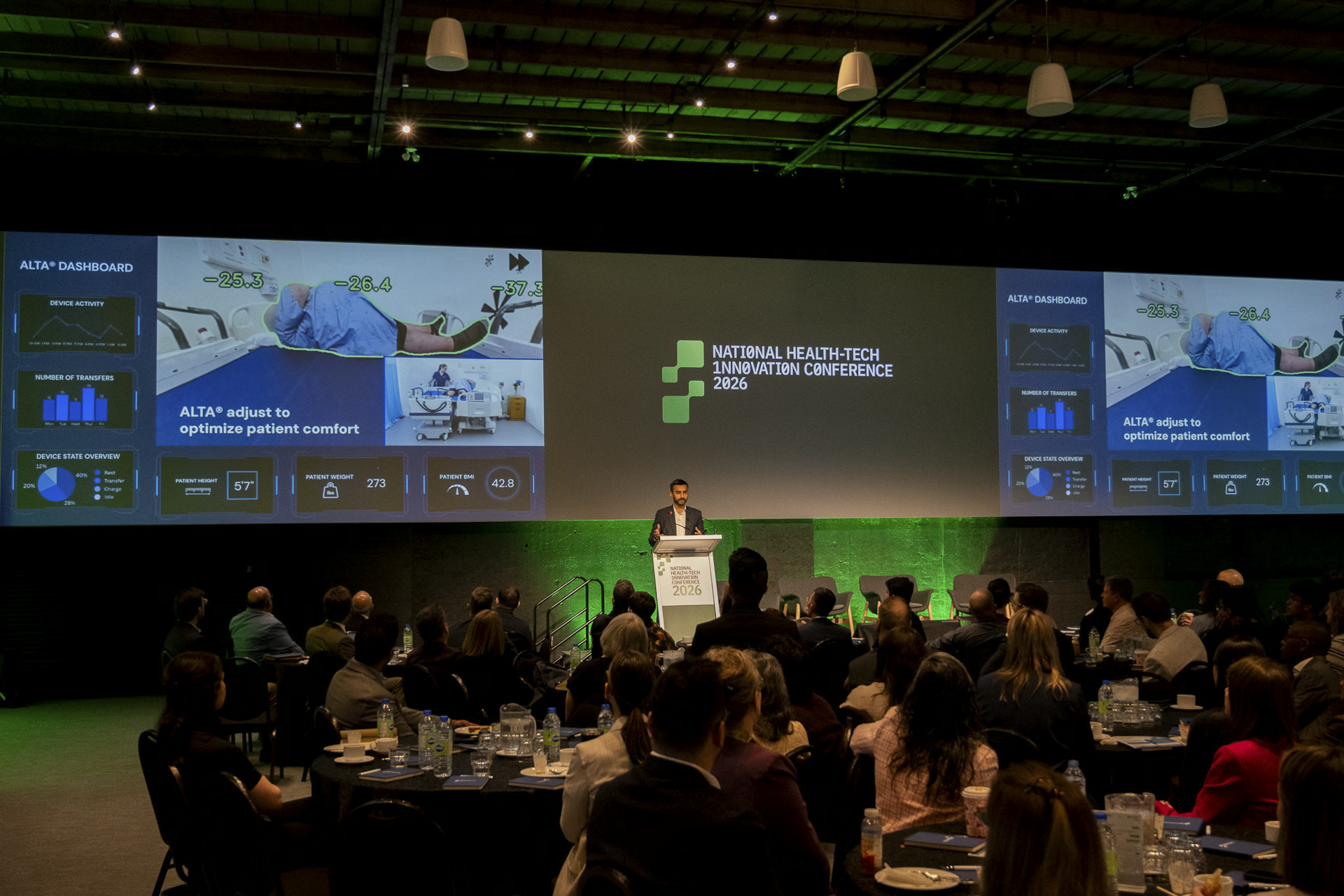
One of the conference's sessions examined what Jayiesh Singh, drawing on the commercialization journey of Able Innovations Inc., called Canada's structural paradox: the country generates breakthrough health technologies, but the very system those technologies are designed to serve often makes it hardest for them to deploy here first. Hospital funding models, procurement timelines, and limited incentives for operational innovation create a gauntlet that Canadian founders know well. The question the session raised was not whether the barriers are real. They are. The question was whether hospitals, policymakers, and industry leaders are willing to realign incentives, purchasing, and policy before the next generation of companies takes their technology south.
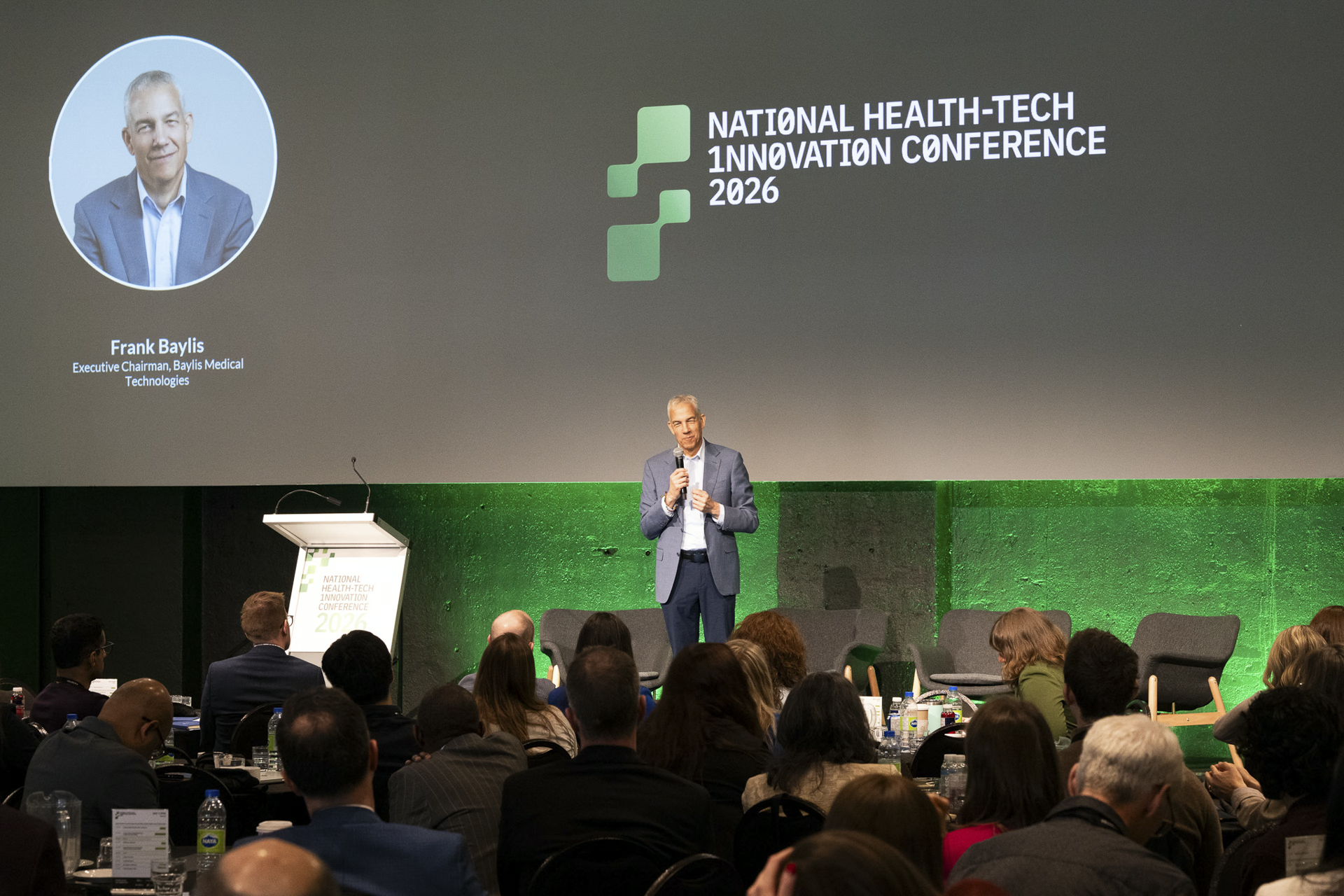
Frank Baylis, Executive Chairman of Baylis Medical Technologies, addressed the same tension from a different angle. His keynote on scaling digital health argued that the path forward is not complicated in theory: build trust, set clear goals, keep the tools simple. What makes it hard is the absence of the cross-sector alignment that turns good intentions into adopted technology.
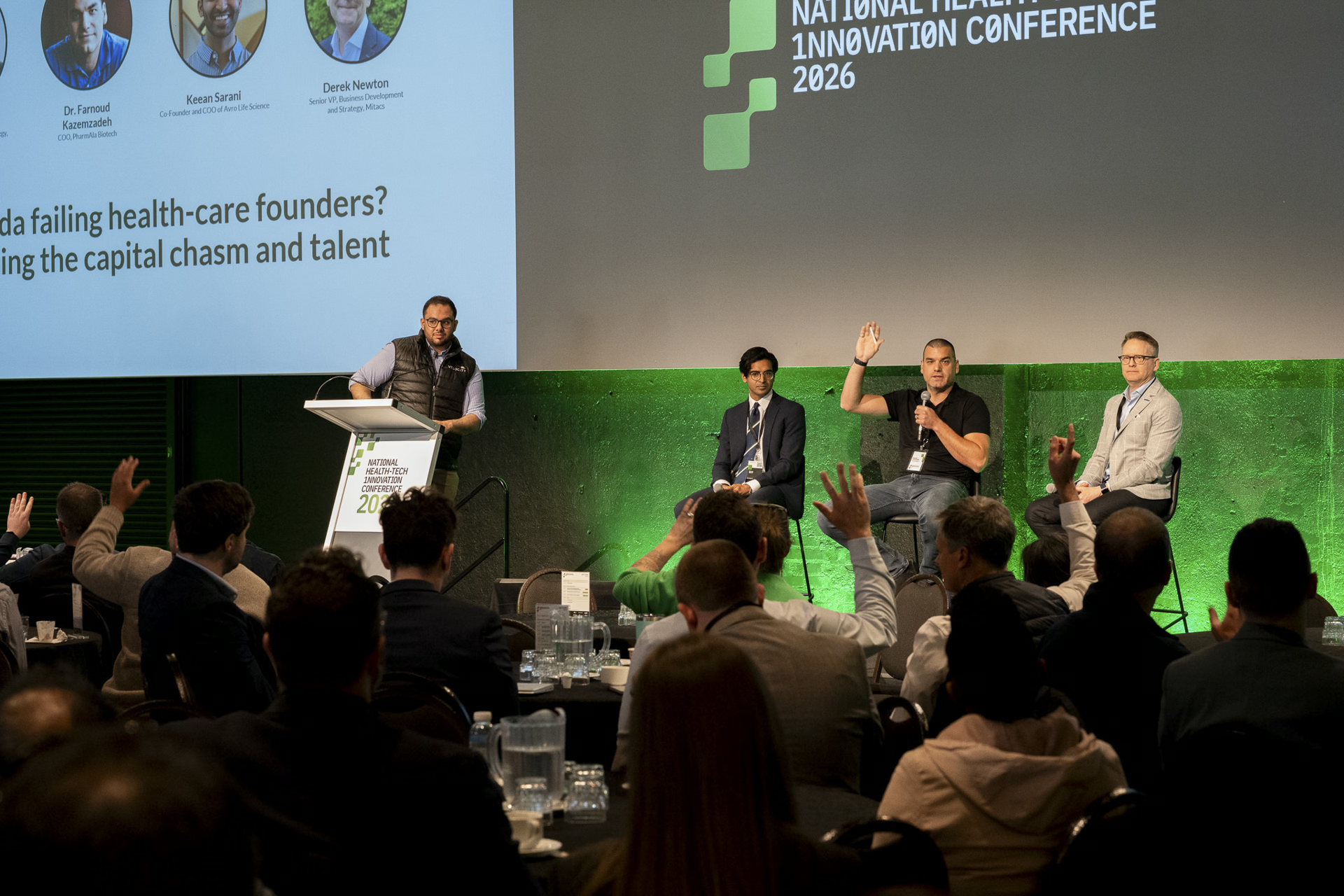
Several sessions zeroed in on the mechanics of why promising technologies stall. Procurement processes built for a different era. Funding structures that reward pilots but not scale. A capital gap that makes early-stage health-tech investment riskier than it needs to be, not because the technology is weak, but because the conditions for proving it are poorly designed.
A session on building a national hospital innovation network explored how shared pilots, applied research, and responsible commercialization could change that calculus: retaining IP and economic value in Canada while giving clinician-led solutions a real path to patients.
The capital conversation was equally direct. Closing the gap for Canadian health-tech founders is not only a question of more funding. It is a question of making early-stage investment a stronger bet in the first place, which means building the conditions that reduce uncertainty: better pilot infrastructure, clearer procurement pathways, and connections between founders and decision-makers that do not take months of cold outreach to form.
Those connections were forming at the conference in real time.
What made the conference different from the discussions that usually surround health innovation was the presence of actual decision-makers: hospital leaders, funders, policymakers, and clinicians sitting alongside the founders trying to build solutions for them. The room was designed for problem-solving, not diagnosis.
Kitchener-Waterloo was the right place to hold it. The region is home to one of Canada's most concentrated corridors of research talent, deep-tech commercialization, and early-stage venture activity. Velocity has spent over fifteen years building the infrastructure to turn university-born ideas into scalable companies. That foundation made Waterloo Region a credible host for a national conversation, not just a convenient one.

Researchers from CHEO, investors, advocates, and founders from coast to coast filled the room. The mix was deliberate. You cannot design a blueprint for change without the people who control the levers sitting at the table. And you cannot build the trust required for cross-sector alignment through a conference call or a white paper.
"Canada has no shortage of great ideas," said Vivek Goel, President and Vice Chancellor, University of Waterloo. "What we need is the trust and cross-sector alignment to scale what works."
The conference was built to generate exactly that: the relationships, the frameworks, and the shared urgency that make trust possible.
The National Health-Tech Innovation Conference 2026 was a beginning, not a conclusion. The problems it addressed, including procurement, capital, adoption, talent retention, will not be resolved in two days. But two days of direct, hands-on engagement between the people who build health technology and the people who govern, fund, and deploy it produces something a policy brief cannot: a shared understanding of what needs to change and who needs to drive it.
Canada has the talent, the technology, and the clinicians. Building the infrastructure to match is the work that follows.
To keep that work moving, Velocity and the CHEO Research Institute are launching Advancing MedTech Together: From Idea to Impact, a webinar series for innovators shaping the future of healthcare. It is designed to sustain the conversations started in Kitchener-Waterloo and bring them to a national audience, with the same focus on practical outcomes over polished panels.